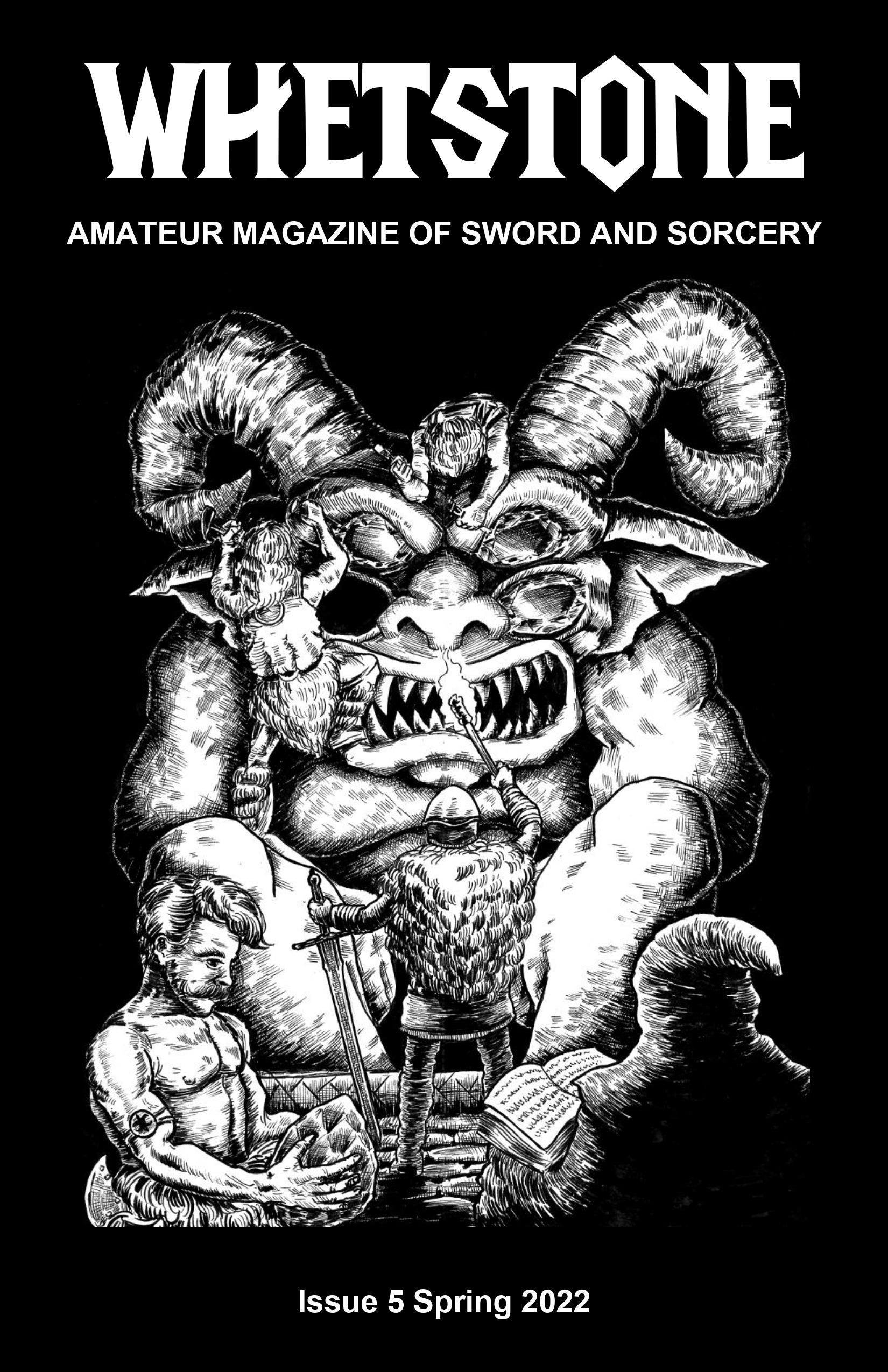
You can access our previous six issues here as free PDFs:
![]() | ||
In all the commotion involved in preparing Whetstone issues for publication, I rarely get to slow down and simply enjoy some of the fiction we are fortunate enough to publish. This is why I want to write a few essays, something of a retrospective, about a few great stories published in Whetstone.
The first one I want to write about is "Undulations" by B. Harlan Crawford, published in Whetstone 7. It's an excellent sword and sorcery tale set in Ancient Greece of myth.
First, a summary (plot spoilers throughout): King Crantor, the lord of the City-state of Epirus, has been betrayed by his chamberlain, the cowardly and traitorous Terpsion. Terpsion helped kill the bodyguards of King Crantor and his wife, the mysterious Queen Audata, who is whispered to be a witch. After committing this heinous act, Terpsion, not confident enough to rule the City-state himself, proceeds to help the warlord, Abbryas of Passaron, invade Epirus in its moment of weakness. Abbryas attacks the city with his army and very nearly conquers it, but Queen Audata and her bodyguard, the Aesir swordswoman Sigyn, prevent this. How so? Audata gets her loyal bodyguard Sigyn to behead her. How does this help, you might ask? Although it is unknown to Sigyn, this beheading is part of a dark magical ritual that will transform Queen Audata into a six-armed serpentine monster who will avenge her and her husband against Terpsion and Abbryas. Eventually, Abbryas' forces are thrown back by this horrible monster, and while pressing his attack into the city, Abbryas is violently killed by an avenging Sigyn. At the very end of the story, there is an intriguing moment where Sigyn learns of Audata's dark magic and her role in the ritual that transformed her friend into a monster.
My summary doesn't do the story justice, and it's even more impressive that Crawford was able to tell such a compelling, multi-faceted story in under 2500 words (our hard limit). At no point in the story do you feel rushed, or that you are reading neutral exposition (although there is a lot of exposition that happens but in a seamless, dramatic way). Moreover, the form of the story is clever. It begins with a creepy and mysterious event, the beheading of a queen by her friend and bodyguard. You can't help but be confused by this inciting incident and must read on.
In addition to the rich and complex plot, Crawford is able to create a rich, immersive world of ancient myth. He intersperses his characters' dialogue with several allusions to Greek mythology and ancient Greek history. For example, characters swear by Zeus, come from recognizable locations in antiquity, and speak in an appropriate antiquated way. Here's an example: Queen Audata, transformed into a monstrous serpent, sibilantly whispers the following to Terpsion in response to his many insults (just before she crushes him): "Let [your insults] comfort you as you bargain with Charon for passage into hell." There are other references that bring the Greek mythology milieu to life. For example, Sigyn is described as a pale-skinned warrior woman of the Aesir. Audata has bargained with Hecate for her transformation. There are several more allusions skillfully embedded into the narrative, making the world feel visceral, full, and ancient.
In addition to the plot and setting, Crawford creates intriguing characters. Even a character who isn't part of the story, the tragic King Crantor, is interesting, and he is only characterized through the narrow perspective of his hateful enemy, the traitorous Terpsion. Of Crantor, Terpsion says, "The chamberlain had long despised Crantor as an effete, henpecked tool of the scheming witch-queen Audata. That Crantor had produced no heir reinforced Terpsion’s opinion that the king was incapable of impregnating the queen due to some unknown physical shortcoming." You get a sense that Terpsion the traitor hates what he sees in Crantor, and this is outlined by the ridiculousness of the insult: nobility, heroism, and equipoise. I am not quite sure how I know, but I got the sense that Crantor was a noble king, beloved by Audata, and the fact that he was betrayed and killed by a worm like Terpsion makes the traitor even more fun to hate.
There are other compelling character dynamics. For example, the relationship between Audata and Sigyn is very fascinating. For example, Audata feels guilt for having her beloved bodyguard participate in such a dark ritual without the Aesir's knowledge; Audata knows that by asking her friend to kill her, she is asking a lot, asking her to work against her bodyguard instincts. Later, after Audata's magic is revealed, there is an intriguing dialogue wherein Audata, transformed into a serpentine demon, apologizes to Sigyn, who, in killing Abbryas, has just avenged her and her husband. Audata's apology to Sigyn is worth quoting at length:
What I have done to you is unforgivable, but it is the least of my sins. I had hoped to die once my vengeance was complete, but that is not Hecate’s will. Until she allows me to die, I will remove myself from the sight of men. Remember me as I was, Sigyn, not as I am. Look upon all this as a nightmare from which you will awake to a fresh new day. Farewell!
There is more I can celebrate about this story: the way characterization happens through dialog and flows indirectly through point of view, the excellent and economic descriptions of action scenes and battle, and the overall theme that the pursuit of vengeance, the poison of hate, causes us to become monsters, a lesson Audata learned.
"Undulations" is truly an accomplishment in sword and sorcery fiction, and we were fortunate to publish it.
You can read this excellent story for free here: Whetstone Issue 7.
What do you think of this story? Share your thoughts in the Whetstone Discord.
Art by Geraldo MarinhoTHE DOGMAN
1016 words
By Christopher Rowe
![]() |
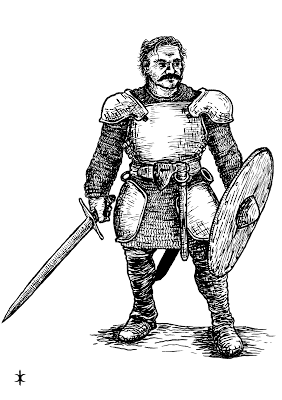
| Art by Carlos Castilho |
When he left his holdfast on the Heights, Dafid took along two of his wolfhounds. His wife, Calla, chose them. The twins, Job and Kit, fiercest of their litter. For a parting kiss, Calla bit his bottom lip hard enough to draw blood. “Go and get yourself killed,” she said, “and I’ll never forgive you.”
He also co-wrote the Supernormal Sleuthing Series for middle grade readers with his wife, novelist Gwenda Bond. He is a graduate of the Bluegrass Writers Studio, serves as a founding board member of the Lexington Writer's Room. He lives in a hundred-year-old house in Lexington, Kentucky, with his wife and their many pets. You can learn more him here: https://www.christopherrowe.net/
Submit: Proofread standard manuscripts should be sent to the publisher at spiraltowerpress@gmail.com as .doc or .docx attachments. Please name your file your preferred last name: "Smith.docx". Include the following subject line: "WHETSTONE: [Last Name]." Please keep cover letters brief. A story title and a one- or two-sentence bio is sufficient. If you have sold a story as a semi-pro or pro-rate, we appreciate the support but please refrain from submitting. We particularly encourage those who have not already been published to submit.
You can access our previous six issues here as free PDFs:
To all Whetstone Contributors,
We received this interesting e-mail from the author Christopher Rowe. Christopher is putting together a list of "currently active" sword and sorcery serialized characters. Many of you have published the adventures of active sword and sorcery serial characters in Whetstone. If so, you might consider contacting Christopher. His contact information can be located on his website (linked below). Here is the e-mail we received:
Dear Editor,
I’m writing to let you know about a webpage I’m building to list all the “currently active” sword and sorcery series characters. You can look at what I’ve got up so far here:
https://swordandsorceryreviews.blogspot.com/p/contemporary-sword-and-sorcery-series.html
What I’m hoping is that you can forward this email to any of your writers who are currently writing series characters, asking that they write me at cvrowe@gmail.com with the following information.
Their byline
The name of the character (or characters in the case of duos or whatever) name
One paragraph about the character—this can be pretty much anything: inspiration, plans, a character bio, whatever
Most importantly, a list of all the stories or novels in which the character has appeared, with links to where those appearances can be read or purchased.
For the last, I want the stories listed in order of publication. And for stories that appeared in collections, I want the individual titles, not just the collection name.
Hopefully this all makes sense, and hopefully we can together build a good resource for the community.
Sincerely,
Christopher Rowe
UKA THE UNDYING, the zombie sorcerer, is experimenting with flashes of dark magicks to blast the minds of bards! Illustration provided by Mustafa Bekir.
"Flashes of Wonder" is posted irregularly. It will feature a sword and sorcery flash fiction prompt. -JRC
Rendering Villainy through Costuming
Sword and sorcery villains bear a lot of narrative weight. Memorable villains have complex personalities, their evil actions driven by specific and often contradictory motivations and psychodramas. But how can writers externalize such internal psychological elements for readers without resorting to long passages of inner monologue, a narrative technique often (though not always) precluded by sword and sorcery genre expectations? One often-overlooked tactic is costuming. Imagine a sword and sorcery villain and describe their costume in detail, using clothing, accessories, and colors to symbolize their inner psyche, i.e., to signal their motivations, their contradictory impulses. For example, maybe they wear all black to represent their cynical worldview, or they might display flashy jewelry to demonstrate their greed, or they might wear religious icons or symbols to clarify their loyalty to dark powers. Moreover, give a sense of time to their costuming; show how their appearance has evolved over time, thereby giving the reader an opportunity to reflect on their growth or descent into darkness. How does their wardrobe interact with the setting and other characters? Let the clothing speak for the villain and deepen their personality in unexpected ways. 300-500 words.
Submissions: OPEN (Issue 7)
Whetstone Issue 6 is now available for free. You can download it HERE. This issue includes several great stories. Thanks to Chuck Clark (Associate Editor), Luke E. Dodd (Associate Editor), Nicole Emmelhainz and Grey Cashwell (First Readers) and all the great contributors for helping us release this issue. We hope you enjoy it! -JRC (Managing Editor)
Issue 6 (Winter 2022) will be published on Friday, December 16th, 2022. Here is the cover that is illustrated by the talented Maegan LeMay.
UKA THE UNDYING, the zombie sorcerer, is experimenting with flashes of dark magicks to blast the minds of bards! Illustration provided by Mustafa Bekir.
"Flashes of Wonder" is posted irregularly. It will feature a sword and sorcery flash fiction prompt. -JRC
Reversals
Sword and sorcery plots are exciting. They are linguistic devices engineered to increase our pulse and respiration and to trigger the release of certain hormones: adrenaline, cortisol, dopamine, and more. They are most exciting at their climax point, their point of highest unresolved emotional tension. What do we mean by unresolved? Great climaxes are interesting because they involve protagonists we care about whose fates are yet to be decided. And climaxes are interesting because the stakes are so high. Almost always climaxes result in a transformation, of the protagonist, of the world, of the reader.
Directly proceeding the climax is what we call the resolution, the narrative events that allow the pent up emotional tension to be dispersed. In endocrinological terms, certain hormones like adrenaline, cortisol, and dopamine are neutralized by resolutions. But there is a unique plot device deployed by some storytellers: the reversal. The reversal comes just after the resolution. Whatever happened in the climax--success, failure, or transformation--is swiftly, and often dramatically, reversed. This tool of the reversal is useful because it can extend the tension and set up an even more intense climax.
Using the visual prompt of the sorcerer's tower provided above, write a 500 word scene that involves a protagonist resolving a conflict, and then render a reversal that reverses that resolution and sets up an even more intense climax.
UKA THE UNDYING, the zombie sorcerer, is experimenting with flashes of dark magics to blast the minds of bards! Illustration provided by Mustafa Bekir.
"Flashes of Wonder" is posted irregularly. It will feature a sword and sorcery flash fiction prompt. -JRC
The Enigmatic Oval Room
There is an oval-shaped room. The floor is a seamless marble slab. Embedded in the marble slab are esoteric designs rendered in tiny threads of precious metal that glint and sparkle in the light. When anyone walks into this room, they are beset by vertigo, nausea, and a terrible sense of wrongness. If anyone lingers in the room, they get ear ringing, headaches, and bleeding from the nose and eyes; if they are foolish enough to linger, their skin becomes as wax and they melt and eventually disappear, evaporating like morning mist. If one listens closely, several sibilant whispers can be heard speaking in the room in tongues unknown.
Darko Suvin, a theorist of distinctively speculative fiction (i.e. science fiction, fantasy, and supernatural horror), developed the concept of "novum" in his famous monograph, Metamorphoses of Science Fiction (Yal UP, 1979). Suvin's "novum" are a fictional objects or entities that signal to the reader that the virtual world they are reading about is not constrained by established physical laws of known science. The unreal laws that govern this unreal world are different and mysterious. Accordingly, for Suvin, in much speculative fiction, "novum" cause a powerful artistic effect called "cognitive estrangement," a unique habit of mind, a form of intense intellectual hospitality that--and most importantly so--permits authors and readers to connect and harmonize over the hitherto unimaginable, e.g. bizarre plot hooks and conflicts that characters must respond to and sometimes (often) resolve through action.
We offer the "oval room" (described above) as one of those "nova," as defined by Suvin. Using the "novum" of the enigmatic room above, write a sword and sorcery flash fiction of 400-800 words where a protagonist's desires are contradicted or impeded by the room and where that conflict is eventually resolved. In other words, write a story about how this room is encountered, how it throws up a roadblock to a character's pressing desire, and how that roadblock is overcome (or not) by that character.
CALL FOR SUBMISSIONS / WHETSTONE / Issue 6 (Winter 2022)
WHETSTONE is an award-winning amateur magazine that seeks to discover, inspire, and publish emerging authors who are enthusiastic about the tradition of “pulp sword and sorcery.” Writers in this tradition include (but are not limited to) the following: Robert E. Howard, Fritz Leiber, Jack Vance, Michael Moorcock, Karl Edward Wagner, David C. Smith, and many more. “Pulp sword and sorcery” emphasizes active protagonists, supernatural menaces, and preindustrial (mostly ancient and medieval) settings. Some “pulp sword and sorcery” straddles the line between historical and fantasy fiction; at Whetstone, however, we emphatically prefer “secondary world settings,” other worlds liberated from the necessity of historical accuracy. Published by Spiral Tower Press.
Managing Editor: Dr. Jason Ray Carney is a lecturer in the Department of English of Christopher Newport University in Newport News, Virginia. He is the co-editor of the academic journal The Dark Man: Journal of Robert E. Howard and Pulp Studies and the area chair of the "Pulp Studies" section of the Popular Culture Association. He serves as the Academic Coordinator for the Robert E. Howard Foundation. He is the author of Rakefire and Other Stories (Pulp Hero Press).
Associate Editor: Chuck E. Clark lives in Southern Wisconsin with his wife and four children. He graduated from the University of Kentucky with a Political Science degree, apprenticed as a jeweler, joined the navy, and now fixes laser microscopes. He has been published in Whetstone and The August Derleth Society's newsletter, Sage of Sac Prairie. He loves collecting rocks, books, and whiskey.
Associate Editor: Luke E. Dodd is a scientist, devourer of music, and collector of hobbies. He is one of the three hosts of The Cromcast, a podcast dedicated to the works of Robert E. Howard and other weird fiction. He lives in Kentucky with his wife and son.
Length: We prefer short, compressed stories that are nevertheless complete and cohesive narratives (1500 to 2500 words). These limits are firm. No more, no less. Stories over or under the limit will not be read. We mean it, friends! This limit serves two functions: (1) the limit is an artistic challenge. It takes skill to tell a compressed, punchy story. (2) We are an amateur publication and only pay a token honorarium, so save your longer works for better paying markets.
Style: We prefer “dialog light, action heavy” fiction with vivid imagery that is unselfconsciously literary but nevertheless takes joy in an occasional old word that gives the breath of antiquity. Please avoid typographical emphasis and variation--e.g. bolding, italicizing, underlining.
Publication, payment, and rights: Issues will be published as .pdf files. If work is selected for publication in WHETSTONE, authors will (1) be paid an honorarium of $10 and (2) will be asked to provide, by contract, "First North American Serial Rights." In our opinion, this means that copyright is NOT transferred. All copyright stays with you, the writer; however, you will have sold/transferred a form of "exclusive use rights" called "First North American Serial Rights" (FNASR). This is the right to publish your unpublished work for the first time, and ONLY the first time, no more. The important thing to remember is that some professional publications may ask for FNASR upon acceptance of a specific work; you are not legally permitted to provide those for that specific work after publication in WHETSTONE, for you have already rendered their use to us. In other words, once you publish a work in WHETSTONE, that works' associated FNASR have been sold/transferred. You CAN publish your previously published work elsewhere as a reprint but only as long as that publication does not require FNASR. This is a long way of saying that WHETSTONE is an amateur publication, meant for showcasing emerging talent for the consideration of professional markets (which is why we kept the word count so low). In essence: save your best work for higher paying markets!
Submit: Proofread standard manuscripts should be sent to the publisher at spiraltowerpress@gmail.com as .doc or .docx attachments. Include the following subject line: "WHETSTONE: [Last Name]." Please keep cover letters brief. A story title and a one- or two-sentence bio is sufficient.
CALL FOR SUBMISSIONS / WHETSTONE / Issue 5 (Spring 2022)
WHETSTONE is an amateur magazine that seeks to discover, inspire, and publish emerging authors who are enthusiastic about the tradition of “pulp sword and sorcery.” Writers in this tradition include (but are not limited to) the following: Robert E. Howard, Fritz Leiber, Jack Vance, Michael Moorcock, Karl Edward Wagner, David C. Smith, and many more. “Pulp sword and sorcery” emphasizes active protagonists, supernatural menaces, and preindustrial (mostly ancient and medieval) settings. Some “pulp sword and sorcery” straddles the line between historical and fantasy fiction; at Whetstone, however, we emphatically prefer “secondary world settings,” other worlds liberated from the necessity of historical accuracy. Published by Spiral Tower Press.
Managing Editor: Dr. Jason Ray Carney is a lecturer in the Department of English of Christopher Newport University in Newport News, Virginia. He is the co-editor of the academic journal The Dark Man: Journal of Robert E. Howard and Pulp Studies and the area chair of the "Pulp Studies" section of the Popular Culture Association. He serves as the Academic Coordinator for the Robert E. Howard Foundation. He is the author of Rakefire and Other Stories (Pulp Hero Press).
Associate Editor: Chuck E. Clark lives in Southern Wisconsin with his wife and four children. He graduated from the University of Kentucky with a Political Science degree, apprenticed as a jeweler, joined the navy, and now fixes laser microscopes. He has been published in Whetstone and The August Derleth Society's newsletter, Sage of Sac Prairie. He loves collecting rocks, books, and whiskey.
Associate Editor: Luke E. Dodd is a scientist, devourer of music, and collector of hobbies. He is one of the three hosts of The Cromcast, a podcast dedicated to the works of Robert E. Howard and other weird fiction. He lives in Kentucky with his wife and son.
Length: We prefer short, compressed stories that are nevertheless complete and cohesive narratives (1500 to 2500 words). These limits are firm. No more, no less.
Style: We prefer “dialog light, action heavy” fiction with vivid imagery that is unselfconsciously literary but nevertheless takes joy in an occasional old word that gives the breath of antiquity.
Publication, payment, and rights: Issues will be published as .pdf files. If work is selected for publication in WHETSTONE, authors will (1) be paid an honorarium of $10 and (2) will be asked to provide, by contract, "First North American Serial Rights." In our opinion, this means that copyright is NOT transferred. All copyright stays with you, the writer; however, you will have sold/transferred a form of "exclusive use rights" called "First North American Serial Rights" (FNASR). This is the right to publish your unpublished work for the first time, and ONLY the first time, no more. The important thing to remember is that some professional publications may ask for FNASR upon acceptance of a specific work; you are not legally permitted to provide those for that specific work after publication in WHETSTONE, for you have already rendered their use to us. In other words, once you publish a work in WHETSTONE, that works' associated FNASR have been sold/transferred. You CAN publish your previously published work elsewhere as a reprint but only as long as that publication does not require FNASR. This is a long way of saying that WHETSTONE is an amateur publication, meant for showcasing emerging talent for the consideration of professional markets (which is why we kept the word count so low). In essence: save your best work for higher paying markets!
Submit: Proofread standard manuscripts should be sent to the publisher at spiraltowerpress@gmail.com as .doc or .docx attachments. Include the following subject line: "WHETSTONE: [Last Name]." Please keep cover letters brief. A story title and a one- or two-sentence bio is sufficient.
This is the cover art for Issue 4. The art is by Jake Kelly. More information about his work can be found HERE. Issue 4 will be published on Friday, December 3rd, 2021.